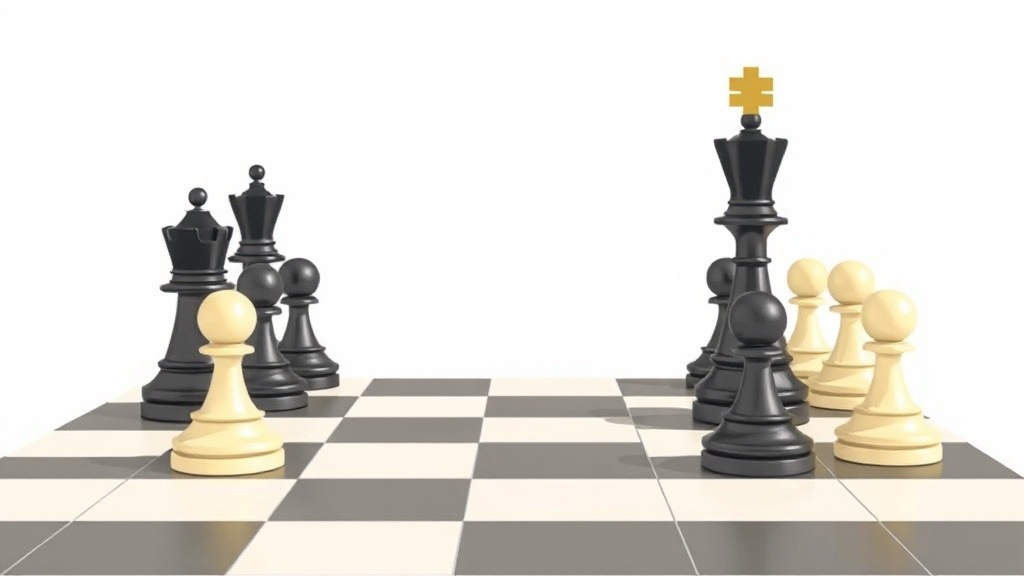
Explore Classes
Chess Ages 5–7

Online Chess Classes for Kids Ages 5–7

Classes start at just $12 per session. Your child will learn chess piece movement, basic strategy, and simple winning patterns while playing alongside 3–6 peers in sessions lasting 25–40 minutes.

View FAQ
Chess for Ages 5–7
From $12/class
Price
3–6 students
Group Size
25–40 min
Schedule
5–7
Ages

Online Chess Classes for Kids Ages 5-7: Build Thinking Skills Early

At ages 5-7, your child's brain is wired to spot patterns and think ahead—and chess taps directly into that. Our online chess classes for kids this age focus on the fundamentals in bite-sized 25-40 minute sessions that match their attention span. Your child will learn how each piece moves, discover simple tactics, and start recognizing basic patterns on the board. These aren't abstract lessons; they're concrete skills that show immediate results in their play.

Small groups of 3-6 students mean your child gets real attention from our rated chess coaches, not just a lecture. They'll practice what they learn right away, play against classmates their own level, and ask questions without getting lost in a crowd. At just $12 per class, you're investing in focus, patience, and problem-solving habits that stick with them far beyond the chessboard.

This age group thrives when learning feels like play, not work. Our classes balance instruction with actual game time, so kids build confidence by winning—and learning from losses in a supportive setting. By the end, your child won't just know chess; they'll have the kind of patience and strategic thinking that helps them tackle challenges in school and beyond.

What Ages 5–7 Learn in Chess

How Each Piece Moves

Through hands-on play and guided practice, kindergarteners and first graders learn how pawns march forward, knights jump in L-shapes, bishops slide diagonally, rooks move straight, queens command the board, and kings take one careful step at a time.

Spotting Simple Winning Moves

Children develop pattern recognition by identifying when a piece is undefended and can be captured, when their own piece can take an opponent's piece for free, and when lining up pieces creates a threat—the foundation of tactical thinking.

Setting Up & Playing Mini-Games

Rather than full 32-piece games, young learners play with 2–6 pieces per side, making games quick (5–10 minutes) and helping them focus on strategy instead of memorization or long sitting periods.

Following Chess Rules & Taking Turns

Kids internalize turn-taking, touch-move rules, and check/checkmate concepts in age-appropriate doses, building patience, concentration, and respect for game structure—skills that transfer to classroom behavior and learning.

Recommended Chess Classes for Ages 5–7

Beginner

Chess for Beginners: Pieces & Rules

5-8 12 4.9
Popular

Chess Tactics & Combinations

8-13 14 4.8
Competitive

Tournament Chess & Advanced Strategy

10-17 16 4.7

Why Ages 5–7 Is a Great Time for Chess

Ages 5–7 are in a critical window for pattern recognition and spatial reasoning development. Chess activates both hemispheres of the brain—the visual-spatial skills needed to map the board and the logical reasoning required to anticipate moves. Children at this stage are naturally curious about rules and games, making chess's structured-yet-creative framework perfect for holding their attention. Unlike older children, young learners benefit from *simplified* chess (fewer pieces, shorter games) rather than tournament play, which keeps their growing attention spans engaged and prevents frustration.

This age group is also developing executive function skills—planning, impulse control, and consequence evaluation—that chess uniquely reinforces. When a 6-year-old must think before moving instead of grabbing the first piece they see, they practice self-regulation in a low-stakes, fun environment. Small group settings (3–6 students) are ideal because peer interaction at this age boosts motivation and social learning; kids want to beat their friend or earn praise from the instructor. The 25–40 minute session length respects the biological reality that K–2nd graders cannot maintain intense focus for 60 minutes, while still providing enough time to play 2–3 complete games and receive meaningful feedback.

"Finally, classes that don't feel like school. My kids actually BEG to log in."
Jennifer L.
Parent of 8 and 11-year-olds

Chess for Ages 5–7 FAQ

Does my child need to know how to read or write to take chess classes?
No. These classes focus entirely on visual learning and hands-on play. The instructor verbally explains moves, demonstrates on the board, and guides children through games—reading and writing are not required. Your child will learn purely through watching, listening, and playing.
How long does it take for a 5–7 year old to learn chess?
Children can learn basic piece movement and play a simple game in just 1–2 classes. However, understanding tactics and strategy develops gradually over 8–12 weeks of consistent play. Think of it like learning to ride a bike: they can do it quickly, but confidence and skill deepen with practice.
Will these classes help my child in school?
Yes. Chess strengthens focus, problem-solving, patience, and planning skills that directly support math, reading comprehension, and classroom behavior. Studies show young chess players score higher on IQ tests and standardized academic assessments. The turn-taking and rule-following also reinforce classroom readiness.
What if my child gets frustrated or loses interest during a game?
Our instructors are trained to keep the energy positive and help children recover from frustration using age-appropriate coaching. Games are short (5–10 minutes), so if your child loses, another game starts quickly. We emphasize fun and learning over winning, and small group sizes mean the instructor can give individual attention and encouragement.

Related Categories

James Chen

James Chen

STEM Program Director
James directs our STEM, robotics and chess programs with 9 years of hands-on STEM education experience. A former MIT Media Lab researcher, he now focuses on making complex science and engineering concepts accessible and exciting for young learners through interactive projects.
View full profile →

Start Chess Classes Today

Join small-group chess classes designed for ages 5–7.

Browse Classes